
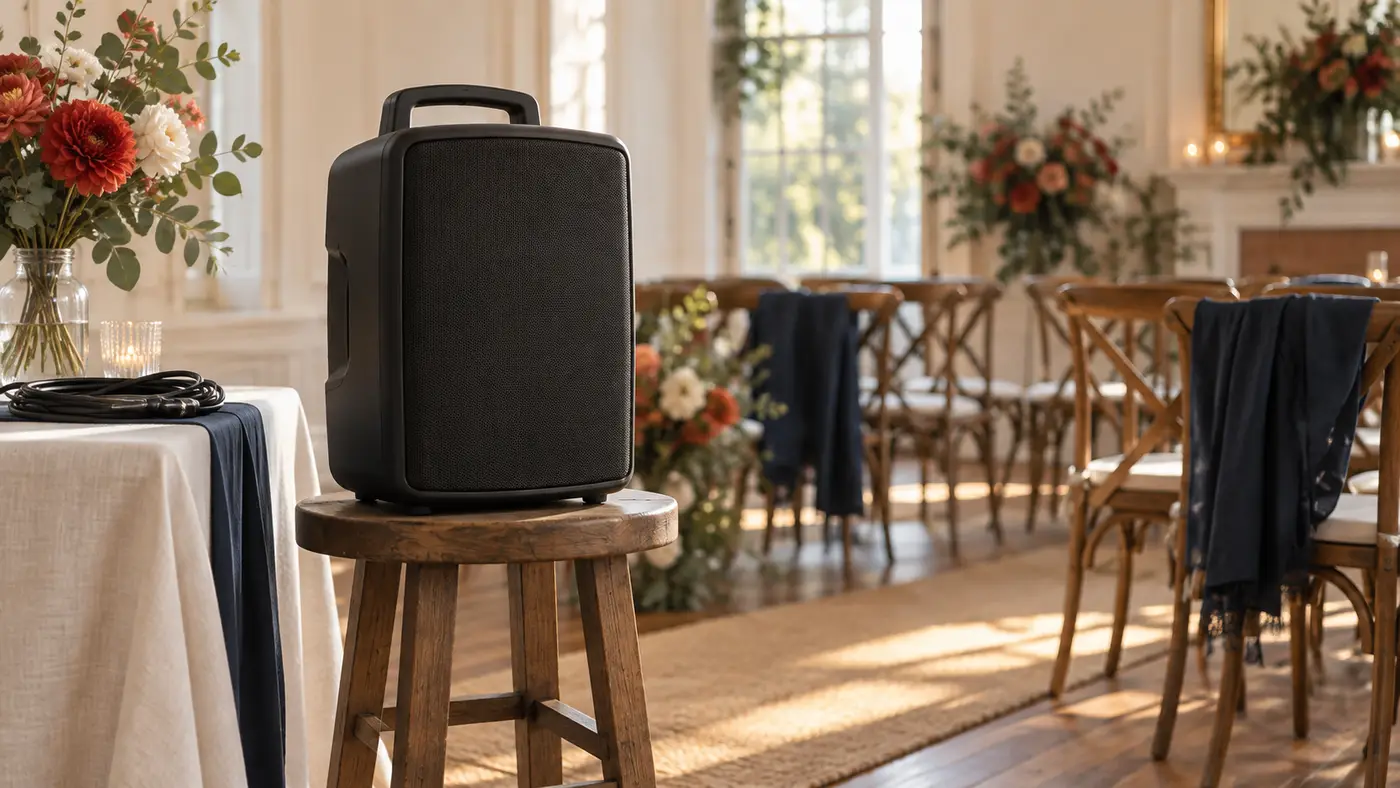
A speech should reach the back row without making the front row wince. That is the job I want a portable PA system to do. It should be easy to carry and quick to connect. Sound should stay clear at the volume the room needs.
The five systems below put a powered speaker, mixer, and battery in one box. They suit hosts who need sound in more than one place. Start with what you plug in. How far must the sound travel? Who carries the gear home?
The shortlist
| Portable PA system | Why I would choose it |
|---|---|
| Bose S1 Pro+ | Light carry and simple small-event setup |
| Electro-Voice EVERSE 8 | More output and a qualified weather rating |
| JBL EON ONE Compact | Four-channel mixing in a carryable box |
| Yamaha STAGEPAS 200BTR | Three mic inputs for a small live set |
| Mackie Thump GO | Simple speech and music playback |
1. Bose S1 Pro+: my pick for a light, simple rig
The S1 Pro+ weighs 14.4 pounds. That matters when you are also carrying a mic stand, bag, and cables. Its three-channel mixer gives you two mic or instrument inputs and a third channel for playback.
I would choose it for one speaker and a singer. A wedding toast or small-room talk would also suit it. Auto EQ adjusts the sound for four supported positions. Move it from the floor to a stand, and it adapts.
Bose quotes up to 11 hours of battery life. Treat that as a limit under stated test conditions, not a promise for every show. The optional wireless transmitters cost extra. A wireless name on the box does not mean those parts come with it.
Strength: an easy carry with useful setup choices. Limit: it is not water resistant, and the bass will not replace a large event system.
2. Electro-Voice EVERSE 8: for events that need more reach
The EVERSE 8 has an 8-inch woofer, and a four-channel digital mixer. Its stated maximum output is 121 dB. I would choose it when a small speaker needs more room to spare. Loud peaks should still sound clear.
Its weather claim needs care. The IP43 rating applies with the supplied input cover, on battery power, while streaming over Bluetooth. It is not a blanket promise for a wired setup in the rain.
EV states more than 12 hours at a moderate level. Near full output, that drops to more than six hours. Both figures use its test conditions. That split is useful. A quiet set uses less charge. A loud outdoor set can drain the same battery much faster.
Strength: useful output and detailed battery figures. Limit: the weather protection has conditions, and wired outdoor use needs a proper plan.
3. JBL EON ONE Compact: a flexible small mixer
The JBL EON ONE Compact packs a four-channel mixer into a 17.6-pound speaker. It fits events that mix live speech with music. The controls stay close at hand.
I would look at the input panel before counting those four channels as four microphones. Mixer channel counts often include stereo playback. List each source you need, then match it to a real socket and its controls.
JBL quotes up to 12 hours of battery life. As with every battery PA here, volume, source material, and battery condition affect the result. Charge it fully before the event. Leave spare time for speeches that run late.
Strength: a useful mixer in a box one person can move. Limit: check the input types carefully before planning a multi-mic panel.
4. Yamaha STAGEPAS 200BTR: for a small live set
The STAGEPAS 200BTR has five mixing channels. You get three mic or line inputs and a stereo line input. I would check this one first for a small act. It has room for more than two live sources.
The letters at the end matter. The 200BTR includes the battery. The standard STAGEPAS 200 treats it as an extra. Do not compare the two prices as if the packages were the same.
The main unit weighs about 12 kg before the battery. That is a clear step up in carrying weight from the Bose. I would accept the weight if it saved me taking a mixer. For a phone playlist alone, it is a lot to carry.
Strength: three mic inputs in an all-in-one system. Limit: a heavier carry; confirm the battery package before you buy.
5. Mackie Thump GO: for straightforward speech and playback
The Thump GO uses an 8-inch woofer and a removable battery. Mackie lists up to 12 hours of use. It has two input channels and voice modes. That keeps things simple for a host with a mic and some music.
I like the idea of music ducking for announcements. It lowers the second channel when a signal arrives on the first. You can speak over the music without reaching for two volume controls.
The word Thump can set the wrong expectation. In an owner's account of using Thump GOs at a venue, the discussion centers on the limits of a small battery rig. I would buy this for modest sound needs, not deep bass across a busy dance floor.
Strength: simple controls and speech-friendly ducking. Limit: two inputs and a small enclosure put a ceiling on the job.
How much sound does your portable PA system need?
I would not choose a PA from wattage alone. Watts describe power, but they do not tell you how evenly people will hear a voice. Speaker design, placement, the room, and crowd noise all matter.
A quiet talk and a party with the same guest count are different jobs. So are a narrow room and a wide lawn. Outside, there are fewer walls to return sound toward the crowd. Need sound for a large event? Ask a local sound supplier to size the system for the site.
Maximum SPL tells you more than a large watt figure. It still needs context. Brands may measure it in different ways. It is one clue, not the whole answer. It cannot tell you how many guests one box will cover.
One speaker or two?
One can work well for a small group. Two can spread sound across a wider area without making one side much louder. For speech, clear and even sound matters more than a stereo effect.
A column system, a pair of full-size speakers, or a separate subwoofer may suit a larger job. They also add weight, cost, and cables. For the rare big event, I would rent a larger rig. That beats pushing a small PA too hard.
Count the inputs, then check the plugs
Write a short list: host mic, guest mic, instrument, music. Check each connection. An XLR mic input is not the same thing as a line input for a phone or mixer.
A combo socket may take more than one plug type. It still handles one source at a time. If you need wireless speech, compare these wireless microphone systems and check how their receivers connect to the PA. Most still need a cable between the receiver and speaker.
Bluetooth is handy for background music. For cues that must start at an exact moment, I would use a cable and silence phone alerts. Keep a downloaded copy of the playlist rather than relying on venue Wi-Fi.
The best portable PA system for different events
The best portable PA system for a solo singer may be the wrong unit for a fitness class. I would start with the job, then narrow the systems by inputs, power, and portability. Here is how I would make that choice.
Public speakers and event hosts
Public speakers need clear sound more than deep bass. A compact portable PA system with one wired microphone can be enough for a quiet room. Put the PA speaker on a suitable stand. Check every seat before the doors open.
For a panel, count the public speakers who need a microphone at the same time. More channels may matter more than extra power. These portable PA systems have small mixers. A larger panel may need a separate mixer and powered speakers.
Solo performers and small bands
Solo performers often need a voice, guitar, and backing tracks. The best portable PA system for that setup needs the right inputs for all three. Can the instrument plug straight in? Musicians may need an extra box to match the signal.
For live music, I would listen for a clean signal at the level the venue needs. Onboard effects can add a little space to a voice, but too much can blur words. Musicians playing acoustic sets may value those controls more than mobile DJs do.
Small bands and gigging musicians need to leave room for loud peaks. A powerful portable PA system must stay clear through the show. If the unit strains on every chorus, lower the level or choose a larger system. Do not keep turning up the mixer.
Fitness classes and outdoor sessions
For fitness classes, I would choose a portable PA system that makes the leader easy to hear over the music. A headset can free the leader's hands. Check that its wireless base connects to a real mic input on the PA.
Battery powered PA systems suit fitness classes without nearby power. Still, check the site first. A battery powered unit does not make the microphone, phone, and other gear weatherproof. Portable systems need a dry, stable place to sit.
Mobile DJs and entertainers
Mobile entertainers need a quick setup, but the right portable PA depends on the role. Portable speakers for a ceremony are not the same as speakers for a crowded dance floor. For mobile gigs, I would carry a small PA for the quiet part and rent a larger rig for loud music.
A subwoofer can handle deep bass while the main speakers focus on the rest. It adds weight and needs a compatible connection. Check the entire system, not just the subwoofer's size. For high quality sound, each part must suit the other parts and the venue.
Powered speakers, mixers, and useful features
An active PA speaker has its amplifier inside. A passive speaker needs a separate amplifier. The portable PA systems in this list are powered speakers, which helps keep the entire system small.
A combo jack can take an XLR or quarter-inch plug. It does not mean both can work at once. Check the input level switch, too. A microphone sends a much lower signal than many line-level devices.
Some microphones need phantom power from the mixer. Many common dynamic handhelds do not. Check the microphone manual and the PA input before turning phantom power on. The EVERSE 8 offers it, but that is not a feature to assume on all portable systems.
Bluetooth connectivity makes playback easy. A Bluetooth enabled portable PA can stream music from a phone without an audio cable. That does not make a Bluetooth connection ideal for every live performance. Backing tracks must stay in time with the act. Check for delay or dropouts before the show.
I would test Bluetooth connectivity at the venue with the phone in the place it will stay. Keep it charged, keep alerts off, and keep a cable in the bag. A wired backup is cheap compared with a silent room.
Build quality and portability
Rugged construction should mean more than a tough-looking grille. Check the handle, corners, feet, and input sockets. Weekly gigs put more wear on gear. Hosts who use it twice a year may need less tough gear.
Portability is about the whole load. Can you carry the speaker in one hand while holding a small bag in the other? Can the entire system fit in your car? Add the stand, leads, and cover to the weight before deciding.
Use a padded bag for frequent transport. Keep heavy gear off the control panel. A rechargeable battery also needs care between shows. Follow the maker's storage advice, especially if the portable PA will sit unused for months.
Compare value without chasing the biggest number
The best PA systems solve the job with the least fuss. Professional sound starts with well-placed gear. Keep the level right for the room. A high price cannot fix a speaker aimed at a wall.
When checking the current price, compare the same package. A portable PA system with a rechargeable battery included can be better value than a cheaper unit sold without one. Include the cover, stand, and cables in the price you compare.
Want the best portable PA system for your budget? Ask for a demo. Use a voice and the music you play. Check quiet and loud passages. High quality sound should stay clear through that range. Listen for a harsh jump as the level rises.
I would judge performance from the back of the venue as well as beside the unit. Portable PA systems are easy to move, so try a better position before buying more power. Often, the best portable PA system is the one you can place well.
Battery life: leave room for a late finish
A battery claim is a test result, not an event schedule. High volume, strong bass, cold conditions, and powering other gear can cut the time you get. An older battery may also hold less charge.
Charge the PA before the day. Check the battery meter when you arrive. Find mains power in case you need it. If the system allows a spare battery, follow the maker's swap process. Do not assume you can change it while sound is playing.
For the Yamaha, the STAGEPAS 200 owner's manual explains its battery use and connections. Read the care notes before the first job. Leave time to find a missing cable.
A calmer setup in five steps
- Put the speaker where guests can hear it, with a clear path for sound.
- Keep microphones behind the front line of the speakers.
- Start with low levels and connect each source.
- Speak at the volume you will use, then raise the level slowly.
- Walk to the back and sides of the space to check the result.
A stand can help a speaker reach past the front row. Use the correct mount and weight rating. Spread the legs. Keep foot traffic clear of the stand. More height is not always safer or better.
If you hear a sharp howl, lower the level first. Then move the mic or speaker. A feedback control can help, but it cannot fix every bad placement. For a film night, plan the sound alongside your projector screen so neither blocks the other.
Common questions
Can a portable PA replace a home Bluetooth speaker?
Yes, if you need mic inputs and more control over live sound. A home speaker may be enough for quiet music. A PA earns its place when someone needs to address the room.
Will one of these run a full band?
That depends on the instruments, room, and volume. A small acoustic act is an easier job. Loud drums and electric guitars need more sound. For a full-band show, ask the venue's sound team. One small battery speaker may not be enough.
Which would I choose for a first event?
The Bose S1 Pro+ for a small, light rig. The EVERSE 8 when its output and outdoor features suit the setup. The Yamaha when three mic inputs save a separate mixer. Buy for the event you host most often, and rent for the outlier.